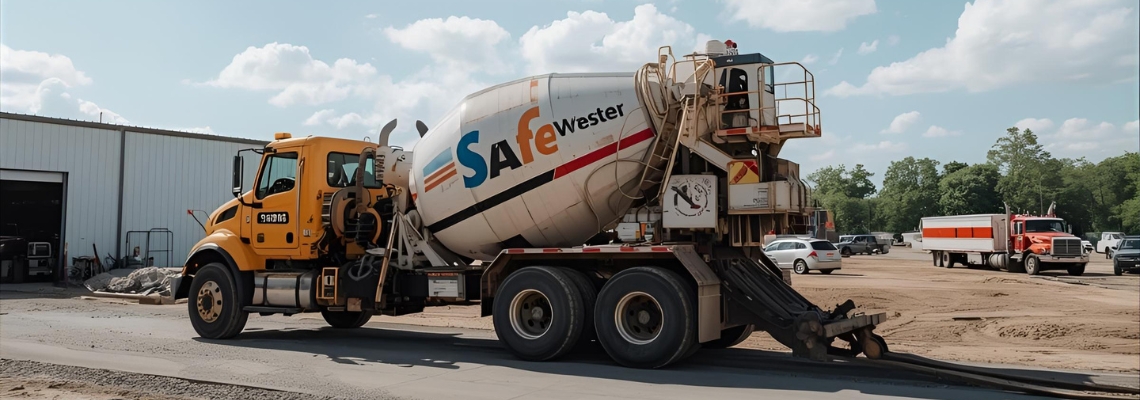
When we are advising clients in St Albans about foundations, driveways, patios or structural pours we explain the practical differences between ready mix concrete and site mixed concrete, and why the choice matters for durability, schedule and long term performance. We know that many homeowners, builders and small contractors come to the decision with questions about cost, access, waste and reliability, and we want to share clear, experience based answers that reflect our hands on history as a local concreting contractor and reliable supplier of concrete. In this guide we examine how ready mix concrete performs in everyday UK conditions, how mixing on site compares when access or scale changes the balance, and how logistical choices such as concrete delivery and concrete deliveries affect the smooth running of a project. We aim to give straightforward, practical guidance that helps you decide whether a ready mixed solution or a site mixed approach will best meet your needs.
Understanding the difference between ready mixed solutions and on site practice
Choosing between ready mix concrete mixes from a batching plant and the option to mix onsite concrete is often a matter of project scale, site access and required consistency. It is manufactured in controlled conditions at a batching plant to a specified mix design and then transported for immediate placement. By contrast site mixed concrete is produced on site by combining cement, aggregate, sand and water using portable mixers or volumetric systems, with the people at the job controlling proportions and timing.
We have worked as both a concrete supplier and a concreting contractor, supplying standard ready mix concrete and adapting mix designs to project needs, while also assisting clients who prefer site mixed concrete for small or irregular tasks. For many larger jobs the advantages of it is that its mixes are clear because factory conditions provide repeatable results and reduced risk of human error. At the same time there remain situations where mix onsite concrete offers the flexibility to stage pours, alter proportions in real time, or work where vehicle access is restricted and traditional concrete delivery would be impractical.
When considering concrete delivery you should weigh the predictability and reduced labour of ready mixed solutions against the control and potential economy of mixing on site. Our experience as a supplier of concrete shows that concrete deliveries reduce on site storage and lower waste volumes, but clients who require regular small batches often favour the mix onsite concrete route. Whether you prefer concrete delivery from a plant or a mobile mixing approach depends on how many cubic metres you need, the width of your access and whether you need specialised formulations among the ready mix concrete mixes available. We have supported both approaches across the St Albans area, matching the supply method to the job and offering technical advice so customers pick the right combination of quality and practicality.
Quality control, mix design and the role of a trusted supplier
Quality control is the single biggest factor that separates good outcomes from disappointing ones, and that is why choosing a reputable concrete supplier matters so much. A professional supplier of concrete will produce ready mix concrete to exacting tolerances and will be able to offer a range of ready mix concrete mixes tailored for strength, workability and curing behaviour. For example we supply mixes that improve finishing characteristics for exposed aggregate driveways, mixes with low water cement ratio for structural applications and fast setting blends that reduce waiting time for follow on trades. This level of control is especially important when a project requires repeatable performance over multiple concrete deliveries to avoid cold joints and to maintain structural integrity across pours.
If a project must mix onsite concrete because of access constraints or very small quantities we still recommend working with an experienced concreting contractor to oversee mix proportions and testing. While site mixing may feel economical for small jobs, the lack of plant based quality control demands attention to details such as aggregate grading, cement freshness and mixing time. As a provider of practical advice and as a concreting contractor we find that customers often secure the best overall value by combining both approaches: using ready mix concrete for large, structural segments and using site mixed concrete for small adjustments or patching where only limited volumes are required.
Practical logistics: scheduling, delivery access and on site handling
Logistics determine the feasibility of different supply methods and can alter cost in surprising ways. Concrete deliveries require vehicle access close to the poor location; metropolitan or historic parts of St Albans often have narrow streets that complicate access for large transit mixers. When access is restricted we help clients plan alternative strategies that might include smaller vehicle deliveries, or choosing to mix onsite concrete with a mobile volumetric unit that can dispatch controlled amounts on demand.
Timing is critical during a pour because concrete delivery and subsequent placing must be coordinated to avoid excessive waiting that affects workability. We also advise on practical handling methods such as the positioning of temporary ramps, the sequencing of reinforcement and the most efficient use of concrete deliveries to reduce the need for stops and restarts. For small-scale works where the supplier of concrete must make multiple concrete deliveries of small volumes we often recommend pre-arranged schedules to ensure continuity and to keep material temperature and slump within acceptable ranges.
Choosing the correct mix for longevity and performance
Selecting the right mix among ready mix concrete mixes is essential for long term performance, whether for a domestic patio, a garage slab or structural footings. Mix selection depends on exposure conditions, structural requirements and the finish required. For busy driveways and external areas exposed to winter salt and freeze cycles we specify mixes with appropriate cement content and reduced permeability to resist ongoing exposure. When a finish requires rapid early strength for traffic return we suggest fast setting formulations from the ready mix concrete mixes available. In all cases we emphasise that the specified mix must be matched to placement and curing practices because even the best will underperform if placed without appropriate compaction and curing.
When the choice shifts towards site mixed concrete the selection becomes more manual and dependent on operator skill. For critical structural elements we strongly recommend the controlled environment of a plant producing it, but for small repairs and garden features a well supervised site mixed concrete batch can meet expectations when the crew follows best practice.
Environmental considerations and waste reduction
Concrete supply and placement have environmental impacts that can be mitigated through careful planning. Ordering accurate volumes for concrete deliveries reduces excess waste, and it usually offers better control over quantities than site mixed concrete where over ordering can occur. We encourage teams planning projects to calculate volumes precisely and to order a slight overrun to allow for waste without creating large surpluses. Using ready mix concrete mixes tailored to the job helps minimise unnecessary cement content and the associated carbon footprint, and modern concrete suppliers increasingly offer formulas that include supplementary cementitious materials to lower embodied carbon without sacrificing performance.
We also advocate methods to reduce waste on site, such as using pumps or wheelbarrow systems for controlled placing and encouraging staged pours that match project sequences. For projects that use site mixed concrete the concreting contractor must manage aggregates and cement storage carefully to avoid material contamination and spoilage, and must ensure that returned or excess concrete is disposed of responsibly. When clients ask about the most sustainable option we discuss both the material formulation and the logistics of delivery and placing, because the combination of correct mix choice and efficient concrete deliveries produces the best overall environmental outcome.
Practical tips for a successful pour and finish
Successful placing relies on coordination between the supplier of concrete and the concreting contractor on site. For ready mix concrete deliveries this means confirming access, ensuring the pour area is cleared and forms are secure before the first truck arrives, and having sufficient manpower and finishing tools ready to place, compact and cure the concrete. For mix onsite concrete scenarios the concreting contractor must ensure consistent mixing times, correct water ratios and a plan to place the concrete immediately after mixing to avoid segregation and plastic shrinkage.
Curing is often overlooked but is essential for final strength and durability. Proper curing after either a ready mix concrete delivery or a site mixed batch reduces cracking and improves long term performance. We advise clients to follow curing recommendations specific to the chosen mix among ready to mix concrete or to use proven curing compounds and coverings when the concreting contractor leaves the site. For decorative finishes the timing of floating and trowelling must be matched to the chosen mix to prevent overworking the surface and to achieve the desired aesthetic.
When to choose ready mix concrete and when to mix on site
For most medium and large scale building works we recommend ready mix concrete because it provides predictable strength and finish across multiple concrete deliveries, and because a professional concrete supplier can ensure mix compliance with structural needs. For small repairs, discrete landscaping elements or when access prevents delivery of transit mixers we advise considering site mixed concrete, because the flexibility to mix small batches can be efficient and practical.
We often see hybrid approaches work best. For example a main foundation pour can come from pre engineered ready to use mix concrete mixes to guarantee structural strength while smaller adjacent work is completed using site mixed concrete that allows on the spot modification. This blended method uses the strengths of both approaches and is frequently the most cost effective and manageable in terms of logistics and material handling.
Working with a local concreting contractor and supplier in St Albans
Selecting a local concreting contractor and concrete supplier brings many advantages. Local companies understand local planning and access issues, have established relationships with plant operators and pump suppliers, and can coordinate concrete deliveries to match site conditions. As a local team that acts as both a supplier and a concreting contractor we combine knowledge of plant produced ready mix concrete mixes with practical on site experience to support smooth project delivery. We provide advice from initial volume calculations and mix selection through to scheduling multiple concrete deliveries and arranging pumps or wheelbarrow services when direct truck access is limited.
Clients benefit from a single point of contact that understands the full process: from advising on ready to use mix concrete mixes and concrete delivery windows to recommending a suitable sequencing plan for the concreting contractor. Working in St Albans we are familiar with the types of jobs commonly requested, from domestic extensions to small commercial works, and we offer experienced guidance that helps decision making. Our approach is practical and collaborative and we keep the discussion focused on achieving the required performance with a clear awareness of costs and timeframes.
Final advice for clients planning a concrete job in St Albans
To ensure the best outcome start with a clear estimate of volume, an understanding of site access and an early conversation with both your concreting contractor and concrete supplier. Decide whether you require factory produced mixes among the ready mix concrete mixes or whether a site mixed concrete approach will better suit very small, staged or access limited work. Think beyond the immediate pour and include curing, finishing and any follow up traffic return times in the plan. Order concrete deliveries with realistic arrival windows and confirm that the concreting contractor will be ready to place as soon as the truck arrives.
We recommend a practical and flexible mindset. Where possible favour ready mix concrete for larger structural work because the consistency and quality control usually outweigh the marginal difference in material cost. For small or awkward jobs mix onsite concrete can give you precise control over volume and timing without requiring large vehicle access.
Our focus is on reliable mix specification, sensible scheduling of concrete deliveries and practical support for placing and finishing, so your project gets the performance it needs with minimal fuss. We are happy to advise on mix choice, to estimate required volumes and to plan delivery and placement logistics in plain terms so non technical clients can make confident choices.

1 reviews · 2 photos
4 months agoVery help and gentle speak. Driver and pump guys very helpful. All team are amazing. Good quality concrete 👍🏼 nice stuff
Read More
63 reviews · 2 photos
4 months agoGood company. They do what they say, and at a good price. And have always been punctual and professional. I will use them again.
Read More
1 review
a month agoHad approximately 60m2 of concrete today they was very punctual, efficient, and tidy the best of used
Read More
10 reviews · 1 photo
a month agoVery quick and fast service harry was great thank you
Read More
1 review
2 months agoAm happy to pouring concrete with save time concrete the harry team works great highly recomended
Read More
3 reviews · 1 photo
a year agovery good service please use this company I’m very happy
Read More

12 reviews
a year agoFantastic company, great quality concrete, driver Gora Dhillon was really nice and kept me informed about the next truck and save me a lot of money...
Read More
1 reviews
a year agoSave Time Haulage is a top of the line organization. From the estimate to the last paver, they showed class and professionalism....
Read More
1 reviews
7 months agoOk happy with them. Fast and good customer service
Read More

1 reviews
6 months agoVery good service۔quick and cooperative also very competitive on price۔
Read More
