Blog Post
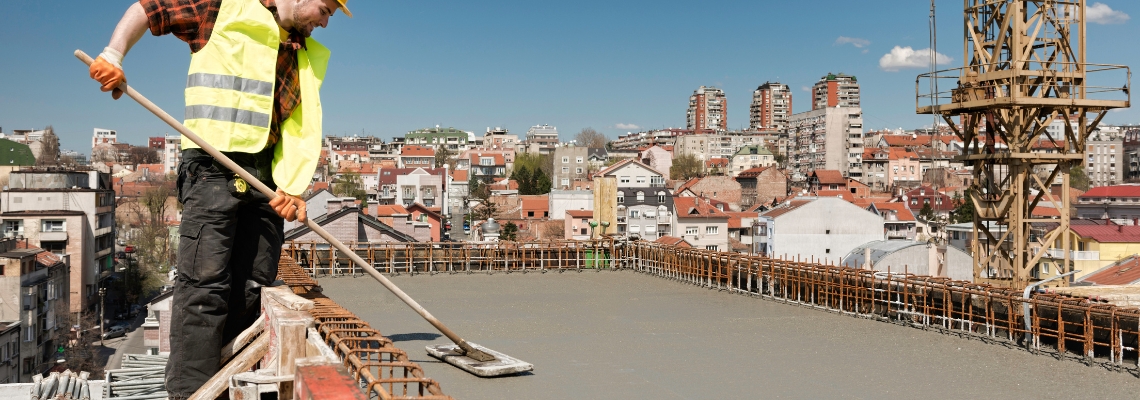
Concrete is one of the most widely used construction materials in the world. From house foundations and driveways to commercial buildings and industrial floors, it plays a major role in modern construction. Yet despite its strength, concrete has one well-known weakness. It can crack.
Many people assume that concrete cracking is simply part of the ageing process. In reality, cracks can begin developing much earlier than expected. Some appear during the initial curing stage, while others form due to shrinkage, temperature changes, impact, or repeated loading over time. This is why construction professionals continue to look for ways to improve concrete performance and increase its lifespan.
One solution that has gained significant attention is fibres admixture. Often added directly into the concrete mix, fibres admixture helps strengthen the internal structure of concrete and improves its ability to handle stress before visible damage appears. While concrete has traditionally relied on reinforcement methods such as steel mesh or reinforcing bars, fibres admixture introduces a different approach by distributing reinforcement throughout the mix itself.
Understanding the science behind fibres admixture helps answer these questions. It also explains why fibre reinforced concrete is becoming increasingly common across residential, commercial and industrial projects throughout the UK.
To understand the value of fibres admixture, it is important to first understand how concrete behaves.
Concrete performs exceptionally well when subjected to compression. This means it can carry significant weight without being crushed. However, concrete is much weaker when exposed to tension. Tension occurs when forces attempt to pull the material apart. This weakness creates conditions where cracks can begin to form.
Even during normal curing, concrete experiences shrinkage. As water evaporates from the mix, internal stresses develop. Small cracks can appear before the structure has even been put into service. While some cracks may seem minor, they can gradually grow larger and allow water, chemicals and other harmful substances to enter the concrete.
Fibres admixture helps address this issue by introducing thousands of tiny reinforcing fibres throughout the concrete mix. Instead of reinforcement being concentrated in specific areas, the fibres become evenly distributed from one end of the concrete to the other.
When stress begins to build within the concrete, these fibres act as bridges across developing cracks. Rather than allowing cracks to spread freely, the fibres help control their growth. This process improves the overall performance of the concrete and helps maintain structural integrity.
The principle may sound simple, but the impact can be significant. By improving crack control at an early stage, fibres admixture helps concrete remain stronger and more stable throughout its service life.
Many people searching online ask whether fibres admixture makes concrete stronger. The answer depends on how strength is measured. While fibres may not dramatically increase compressive strength, they can improve toughness, crack resistance, impact resistance and post-crack performance. These characteristics play an important role in real-world construction environments where concrete faces a wide range of stresses.
Cracking remains one of the most common concerns in concrete construction. Whether it occurs in a warehouse floor, a residential driveway or a large commercial slab, cracking can affect appearance, performance and maintenance requirements.
Concrete naturally experiences movement. Temperature fluctuations cause expansion and contraction. Moisture changes influence shrinkage. Daily use introduces loading forces. Over time, these factors place pressure on the concrete structure.
Without effective crack control measures, small fractures can gradually expand. Once cracks become wider, water penetration becomes easier. During colder conditions, freeze-thaw cycles can increase deterioration. In industrial environments, chemical exposure may accelerate damage even further.
Fibres admixture helps reduce these risks by limiting crack development from the beginning. Instead of allowing stress to concentrate in one location, fibres distribute stress more evenly throughout the concrete.
This mechanism can help reduce plastic shrinkage cracking, which often develops shortly after placement. It can also assist in controlling long-term cracking caused by drying shrinkage and thermal movement.
For construction professionals, crack control is not simply about appearance. It is about protecting long-term performance. Concrete that experiences fewer and smaller cracks often requires less maintenance and remains functional for longer periods.
This explains why fibre reinforced concrete has become increasingly popular in projects where durability is a priority.
Durability is one of the most important factors in construction. A structure that performs well over many years provides greater value than one that requires frequent repairs.
Durability depends on many variables. Mix design, curing practices, environmental conditions and construction methods all contribute to performance. Fibres admixture supports durability by helping concrete withstand the challenges it faces throughout its lifespan.
When cracks develop, they create pathways for external substances. Water can enter. Chlorides can penetrate. Harmful chemicals may reach deeper layers of the structure. Over time, these factors can weaken the concrete and contribute to deterioration.
By reducing crack width and controlling crack growth, fibres admixture helps limit these pathways. The concrete remains more resistant to environmental influences and maintains its condition for longer periods.
This benefit becomes especially valuable in locations exposed to heavy traffic, changing weather conditions or demanding operational requirements. Industrial floors, distribution centres, agricultural facilities and external paving areas often experience conditions that place significant pressure on concrete surfaces.
Many property owners focus primarily on the initial construction stage. However, the true cost of concrete often emerges over time through maintenance, repairs and disruption. Improving durability from the beginning can have a meaningful impact on long-term performance.
The science behind fibres admixture demonstrates that stronger concrete is not simply about achieving high strength values in laboratory tests. It is about creating concrete that continues performing effectively under real-world conditions year after year.
One of the most interesting aspects of fibres admixture is its effect on toughness.
In construction, toughness refers to a material's ability to absorb energy before failure occurs. While traditional concrete can be very strong, it can also be brittle. Once cracking begins, failure can sometimes occur suddenly.
Fibres help change this behaviour.
When concrete contains fibres, energy is distributed across thousands of reinforcement points. As stress increases, fibres help hold the material together and slow crack progression. This allows the concrete to absorb more energy before significant damage occurs.
This characteristic becomes particularly valuable in environments where concrete experiences repeated loading, vibration or occasional impacts.
Industrial facilities often see constant forklift movement. Commercial yards may experience vehicle traffic throughout the day. Agricultural sites frequently handle heavy equipment. In these situations, concrete faces challenges beyond simple compression loads.
Fibres admixture helps improve resistance to these demands by increasing toughness and reducing the likelihood of sudden deterioration.
This does not mean that fibres eliminate all risk of damage. No concrete solution can completely prevent wear. However, the additional reinforcement provided by fibres helps improve performance under conditions that would otherwise accelerate cracking and surface degradation.
As a result, fibre reinforced concrete is increasingly viewed as an important component of modern concrete technology.
Construction methods continue to evolve as new technologies become available. The growing use of fibres admixture reflects a wider industry focus on performance, durability and efficiency.
Builders today face increasing expectations regarding quality and longevity. Clients want structures that remain functional for longer periods. Project managers seek solutions that help minimise future maintenance concerns. Engineers look for ways to improve concrete behaviour under real operating conditions.
Fibres admixture addresses many of these objectives through a relatively straightforward addition to the concrete mix.
Unlike visible reinforcement systems, fibres become integrated throughout the entire concrete structure. This creates reinforcement at a microscopic level that supports the concrete from within.
The growing popularity of fibre reinforced concrete also reflects a better understanding of how concrete behaves over time. Modern construction is no longer focused solely on initial strength. Greater attention is being given to long-term performance, lifecycle costs and resistance to deterioration.
These factors continue to drive interest in fibres admixture across a wide range of applications.
The benefits of fibres admixture can be seen across many different construction environments. While every project has unique requirements, the underlying goal remains the same. Construction professionals want concrete that performs well under pressure and continues to do so for many years.
Industrial flooring is one area where fibre reinforced concrete has become increasingly common. Warehouses, manufacturing facilities and distribution centres often experience constant movement from machinery and vehicles. Repeated loading places significant stress on the concrete surface. Over time, weak points can develop into visible damage. Fibres admixture helps improve resistance to these stresses by supporting the concrete structure throughout the slab.
External paving and hardstanding areas can also benefit from fibre reinforcement. Outdoor concrete is exposed to changing temperatures, rainfall and seasonal weather patterns. These environmental factors contribute to movement within the concrete. By helping to control crack formation, fibres admixture supports better long-term performance.
Agricultural facilities present another demanding environment. Concrete surfaces may be exposed to moisture, equipment traffic and daily operational activity. In such settings, durability becomes a major consideration. Fibre reinforced concrete can help improve resistance to wear while supporting structural stability.
Residential construction also benefits from advances in fibre technology. Driveways, garage floors, pathways and foundations all face stresses that can lead to cracking over time. Homeowners increasingly seek construction solutions that support longevity and reduce maintenance concerns. Understanding the role of fibres admixture helps explain why it has become part of many modern concrete applications.
As construction knowledge continues to evolve, fibres are no longer viewed as a specialist option reserved for large projects. They are increasingly recognised as a practical solution that can improve concrete performance across a wide variety of construction settings.
The science behind fibres admixture becomes even more interesting when viewed at a microscopic level.
Concrete may appear solid and uniform from the outside, but its internal structure contains countless microscopic pores and natural imperfections. These tiny weaknesses can become starting points for crack development when the material experiences stress.
As concrete cures and ages, internal forces continue to act on the structure. Temperature changes, shrinkage and loading create movement that places pressure on these weak points. Without reinforcement, small cracks may begin to form and gradually grow larger.
Fibres work by interrupting this process.
When a crack begins to develop, fibres crossing the crack path provide resistance. Instead of allowing the crack to open freely, the fibres help transfer stress across the affected area. This mechanism slows crack growth and helps maintain the integrity of the surrounding concrete.
Engineers often describe this process as crack bridging. The fibres create numerous connection points throughout the concrete matrix. Rather than concentrating stress in one location, the forces become distributed more evenly.
This microscopic reinforcement system helps explain why fibre reinforced concrete often performs differently from conventional concrete under similar conditions. The improvement is not always visible immediately after placement. In many cases, the greatest benefits emerge over time as the concrete faces real-world stresses.
For anyone asking how fibres admixture improves concrete durability, this internal crack control mechanism provides a large part of the answer.
A common misconception in construction is that strong concrete automatically means durable concrete. While strength is important, it represents only one aspect of overall performance.
Concrete can achieve impressive compressive strength values yet still experience problems if cracking becomes excessive. In practice, long-term durability depends on how well the material responds to everyday stresses throughout its service life.
This distinction helps explain why fibres admixture has attracted growing interest within the construction industry.
Strong concrete can carry heavy loads. Long-lasting concrete can carry those loads while resisting the effects of shrinkage, movement, impact and environmental exposure. The combination of these qualities often determines whether a structure continues to perform effectively over many years.
Fibres admixture contributes to this broader view of performance. By supporting crack control, improving toughness and helping distribute stress, fibres assist concrete in dealing with the challenges it encounters after construction is complete.
Many concrete problems do not appear immediately. They develop gradually over months or years. Small cracks become larger. Surface wear increases. Moisture enters vulnerable areas. Maintenance requirements begin to grow.
Reducing these risks starts with understanding how concrete behaves throughout its lifespan. The science behind fibres admixture focuses on supporting that long-term performance rather than concentrating solely on initial strength measurements.
This approach aligns closely with modern construction priorities, where lifecycle value has become increasingly important alongside structural performance.
The construction sector continues to face growing demands. Buildings, infrastructure and industrial facilities are expected to remain functional for longer periods while operating under increasingly challenging conditions.
At the same time, owners and developers are paying greater attention to maintenance costs, durability and whole-life performance. These priorities have encouraged the industry to examine not only how structures are built but also how materials behave over time.
Fibres admixture forms part of this wider shift in thinking.
Rather than viewing concrete as a simple mixture of cement, aggregates and water, modern construction increasingly recognises the importance of advanced material technology. Small improvements within the concrete mix can influence performance for many years after placement.
This is particularly relevant as projects become larger and operational demands increase. Whether a concrete slab supports heavy machinery, vehicle traffic or daily commercial activity, its ability to resist deterioration has a direct impact on functionality and maintenance requirements.
The growing popularity of fibre reinforced concrete reflects a deeper understanding of these challenges. Construction professionals are increasingly focused on preventing problems rather than responding to them after they occur.
For property owners, developers and contractors alike, understanding the role of fibres admixture provides valuable insight into how modern concrete technology continues to evolve.
The science behind fibres admixture reveals that stronger concrete performance is about far more than compressive strength alone. Concrete faces many different challenges throughout its lifespan, including shrinkage, movement, impact, environmental exposure and repeated loading. These forces can contribute to cracking and gradual deterioration if they are not effectively managed.
Fibres admixture addresses these challenges by distributing reinforcement throughout the concrete mix. This helps control crack development, improve toughness, support durability and enhance overall performance under real-world conditions. The fibres act within the concrete structure itself, helping to bridge developing cracks and distribute stress more evenly.
As construction standards continue to advance, fibre reinforced concrete has become an increasingly important solution across residential, commercial and industrial applications. Its growing use reflects a broader industry focus on durability, longevity and long-term value.
Understanding how fibres admixture works allows builders, engineers and property owners to make more informed decisions about concrete performance. While no material can eliminate every risk associated with wear and ageing, the ability to improve crack control and support structural stability makes fibres admixture an important part of modern concrete technology. The result is concrete that is better prepared to handle the demands of everyday use and maintain its performance well into the future.
At Save Time Haulage, we provide high-quality fibres admixture solutions designed to enhance concrete performance, improve crack resistance and support longer-lasting construction results. We work closely with contractors, builders and developers to supply concrete mixes that help achieve stronger, more durable surfaces for a wide range of residential, commercial and industrial projects.

1 reviews · 2 photos
4 months agoVery help and gentle speak. Driver and pump guys very helpful. All team are amazing. Good quality concrete 👍🏼 nice stuff
Read More
63 reviews · 2 photos
4 months agoGood company. They do what they say, and at a good price. And have always been punctual and professional. I will use them again.
Read More
1 review
a month agoHad approximately 60m2 of concrete today they was very punctual, efficient, and tidy the best of used
Read More
10 reviews · 1 photo
a month agoVery quick and fast service harry was great thank you
Read More
1 review
2 months agoAm happy to pouring concrete with save time concrete the harry team works great highly recomended
Read More
3 reviews · 1 photo
a year agovery good service please use this company I’m very happy
Read More

12 reviews
a year agoFantastic company, great quality concrete, driver Gora Dhillon was really nice and kept me informed about the next truck and save me a lot of money...
Read More
1 reviews
a year agoSave Time Haulage is a top of the line organization. From the estimate to the last paver, they showed class and professionalism....
Read More
1 reviews
7 months agoOk happy with them. Fast and good customer service
Read More

1 reviews
6 months agoVery good service۔quick and cooperative also very competitive on price۔
Read More
