Blog Post
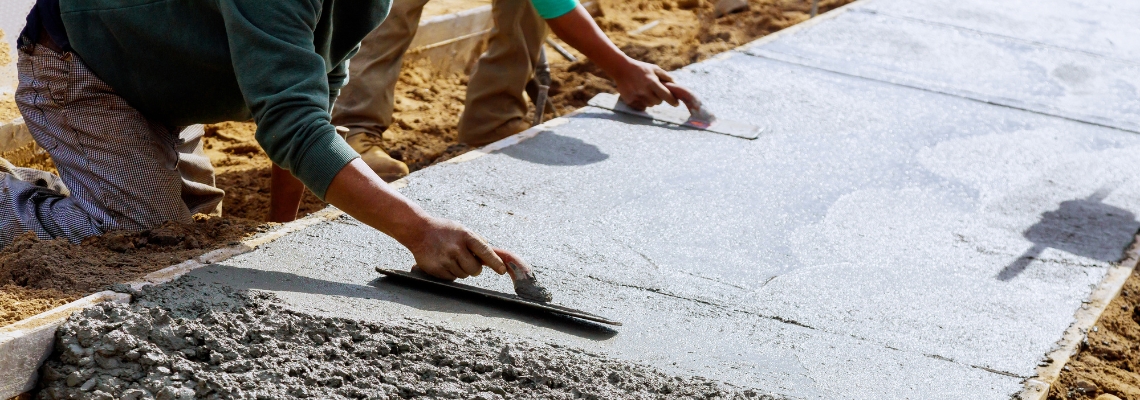
Concrete has always been trusted for its strength, reliability and versatility, yet it has never been a perfect material. Over time, engineers and contractors have learned that concrete needs support to perform well under real world conditions. One of the most effective ways to improve concrete performance today is through fibres admixture. This approach focuses on strengthening concrete internally, rather than relying only on external reinforcement methods.
Fibres admixture has become increasingly relevant as construction standards rise across residential, commercial and infrastructure projects. Modern structures demand concrete that can resist cracking, control shrinkage and maintain durability under constant stress. Fibres admixture answers these challenges by reinforcing the concrete matrix itself, helping it behave more predictably from placement through to long term use.
This topic is especially important for professionals seeking practical knowledge rather than promotional claims. Fibres admixture is not a trend driven by marketing but a proven material solution supported by decades of research, site experience and performance data. Understanding how fibres work, where they add value and how they affect concrete behaviour helps decision makers make informed choices that protect quality and longevity.
This article explores fibres admixture in depth, focusing on how it works, the types available, performance benefits and real construction applications. The goal is to provide clear, experience driven insight that supports better concrete outcomes without exaggeration or sales language.
Fibres admixture refers to small, discrete fibres added directly into a concrete mix during batching. These fibres distribute evenly throughout the concrete, creating a three dimensional reinforcement network. Unlike traditional steel bars or mesh, fibres work at a microscopic level across the entire volume of concrete.
Concrete naturally performs well under compression but struggles under tension. This weakness becomes visible when cracks form due to drying, loading or temperature changes. Fibres admixture addresses this limitation by helping concrete resist tensile stresses as they develop. When cracks begin to form, fibres bridge across them, slowing their growth and reducing their width.
This mechanism changes how concrete behaves under stress. Instead of cracking suddenly, fibre reinforced concrete shows gradual and controlled cracking. This improves safety, durability and appearance. The fibres remain active throughout the life of the concrete, responding to movement and stress wherever it occurs.
Fibres admixture also improves internal cohesion within the concrete. By enhancing bonding between cement paste and aggregates, fibres help reduce segregation and bleeding. This contributes to more consistent quality and improved surface integrity, particularly in slabs and exposed concrete elements.
Construction demands have changed significantly over the years. Buildings and infrastructure now face heavier loads, higher usage and more aggressive environmental conditions. At the same time, there is pressure to reduce construction time, labour input and long term maintenance costs. Fibres admixture supports these goals by improving concrete performance without adding complexity on site.
One key reason for its growing use is crack control. Cracks are often the first sign of concrete distress and the starting point for durability problems. By controlling crack formation early, fibres admixture helps preserve the integrity of concrete elements over time. This is especially valuable in ground bearing slabs, pavements and external concrete.
Another factor is efficiency. Fibres admixture can reduce the need for traditional reinforcement in certain applications. This simplifies construction processes and lowers the risk of placement errors. Fewer reinforcement installations also mean safer working conditions and faster project delivery.
Sustainability also plays a role. Longer lasting concrete reduces the need for repairs and replacements, lowering material consumption and carbon impact over the life of a structure. Fibres admixture further supports this by improving durability and minimizing the risk of premature failure.
The early life of concrete is critical to its long term performance. During the first few hours after placement, concrete is vulnerable to plastic shrinkage cracking. This occurs as moisture evaporates from the surface faster than it is replaced by bleed water. Fibre admixture helps counter this process.
Fine fibres distributed throughout the mix restrict the movement of cement particles as shrinkage begins. This restraint reduces stress concentration at the surface and limits the formation of micro cracks. As a result, the concrete surface remains more intact and resistant to early damage.
Fibres also improve the stability of fresh concrete. They help control settlement around reinforcement and reduce segregation in mixes with varying aggregate sizes. This contributes to a more uniform internal structure and better overall quality.
During curing, fibres continue to provide support as hydration progresses. By maintaining internal cohesion, fibres admixture helps concrete develop strength more evenly, reducing weak zones that could later become crack initiation points.
Once concrete has hardened, fibres admixture continues to influence its performance. Under loading, fibres transfer stress across developing cracks, allowing the concrete to maintain load carrying capacity even after cracking begins. This behaviour is known as post crack performance and is a key advantage of fibre reinforced concrete.
In practical terms, this means that concrete elements are less likely to fail suddenly. Instead, they show gradual deformation, providing warning before failure. This characteristic is especially important in industrial and structural applications where safety and resilience are priorities.
Fibres admixture also improves impact resistance. Concrete exposed to dropped loads, vehicle traffic or dynamic forces benefits from the energy absorbing capacity provided by fibres. This reduces surface damage and extends service life.
Long term durability is further enhanced by reduced crack widths. Narrow cracks limit the ingress of water and aggressive agents, protecting the concrete from corrosion and freeze thaw damage. This is particularly relevant in the UK climate, where moisture and temperature variation are constant challenges.
Several fibre types are used in concrete, each offering specific performance benefits. Steel fibres are widely recognised for their strength and stiffness. They are often used in industrial floors and heavy duty pavements where load carrying capacity and fatigue resistance are required.
Synthetic fibres, commonly made from polypropylene, are typically used for plastic shrinkage control. These fibres are lightweight and disperse easily within the mix. They are particularly effective in reducing early age cracking and improving surface durability.
Macro synthetic fibres provide a balance between flexibility and strength. They offer improved post crack performance without the corrosion risk associated with steel. This makes them suitable for environments exposed to moisture or chemicals.
Glass fibres are used in specialised applications such as architectural concrete and thin sections. They provide high tensile strength and allow for innovative designs where conventional reinforcement would be impractical.
Selecting the right fibres admixture depends on the performance requirements of the project rather than a single material preference.
Industrial floors are among the most demanding concrete applications. They must support heavy loads, resist abrasion and remain flat and crack controlled over large areas. Fibres admixture has become a standard solution in many industrial flooring systems.
By distributing reinforcement throughout the slab, fibres help manage shrinkage and thermal movement. This reduces joint spacing requirements and improves load transfer across cracks. The result is a more robust and serviceable floor.
Fibres admixture also improves resistance to forklift traffic and impact loads. This reduces surface wear and minimises repair needs, supporting continuous operation in warehouses and factories.
External concrete elements face constant exposure to weather, moisture and temperature change. Fibres admixture helps these elements cope with repeated expansion and contraction cycles.
In pavements and hard standings, fibres improve crack control and edge durability. This reduces spalling and surface deterioration over time. The improved toughness provided by fibres also helps concrete resist damage from traffic loading.
These benefits make fibres admixture a practical choice for long lasting external concrete solutions.
Precast concrete benefits from fibres admixture by reducing reliance on traditional reinforcement cages. This allows for thinner sections, improved surface finish and easier handling during transport and installation.
Sprayed concrete applications rely heavily on fibres for structural performance. Fibres provide immediate support and long term stability, making them essential in tunnels, slopes and retaining structures.
In both cases, fibres admixture contributes to efficiency, safety and performance.
Successful use of fibres admixture depends on proper specification and quality control. Fibre type, dosage and mix design must align with project requirements and performance expectations.
Trial mixes and testing help confirm workability and performance. Collaboration between designers, suppliers and contractors ensures fibres are used effectively without compromising finish or productivity.
Proper mixing and placement techniques are also essential. When handled correctly, fibre reinforced concrete behaves predictably and delivers consistent results.
Fibres admixture supports long term concrete performance by reducing crack related deterioration. Structures remain more watertight, durable and visually acceptable over time.
Lower maintenance requirements translate into cost savings and reduced disruption. This makes fibre reinforced concrete an attractive option for both new construction and asset management strategies.
As construction standards continue to evolve, fibres admixture is expected to play an even greater role in concrete design. Advances in fibre technology and performance testing support more refined and efficient use.
The focus on durability, sustainability and resilience aligns closely with the benefits fibres provide. This position fibres admixture as a core component of modern concrete practice rather than a specialist addition.
Concrete strengthened from within offers greater confidence in performance and longevity, meeting the expectations of today’s built environment.

1 reviews · 2 photos
4 months agoVery help and gentle speak. Driver and pump guys very helpful. All team are amazing. Good quality concrete 👍🏼 nice stuff
Read More
63 reviews · 2 photos
4 months agoGood company. They do what they say, and at a good price. And have always been punctual and professional. I will use them again.
Read More
1 review
a month agoHad approximately 60m2 of concrete today they was very punctual, efficient, and tidy the best of used
Read More
10 reviews · 1 photo
a month agoVery quick and fast service harry was great thank you
Read More
1 review
2 months agoAm happy to pouring concrete with save time concrete the harry team works great highly recomended
Read More
3 reviews · 1 photo
a year agovery good service please use this company I’m very happy
Read More

12 reviews
a year agoFantastic company, great quality concrete, driver Gora Dhillon was really nice and kept me informed about the next truck and save me a lot of money...
Read More
1 reviews
a year agoSave Time Haulage is a top of the line organization. From the estimate to the last paver, they showed class and professionalism....
Read More
1 reviews
7 months agoOk happy with them. Fast and good customer service
Read More

1 reviews
6 months agoVery good service۔quick and cooperative also very competitive on price۔
Read More
